

Design-Build vs. Design-Bid-Build in Honolulu: What’s the Real Difference for Homeowners?
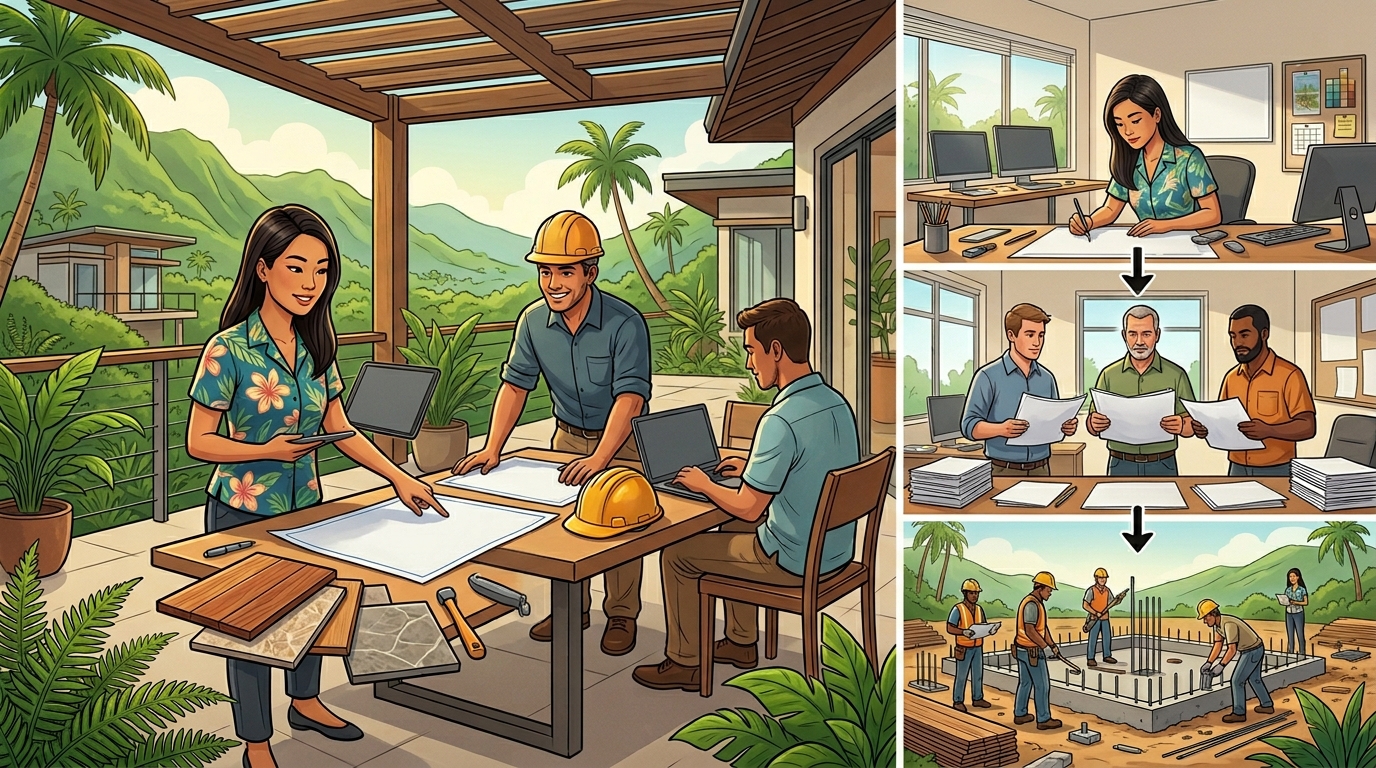
If you’re planning a home renovation or new build in Honolulu, you’ll hear two phrases almost right away: design-build and design-bid-build. They sound similar. They are not.
Let’s slow this down and make it crystal clear—no jargon, no guessing, just the facts homeowners actually need.
Why This Choice Matters More in Honolulu
Building in Honolulu is not like building on the mainland. Permitting is more complex. Zoning rules are tighter. Coastal, hillside, and flood regulations can change what’s allowed on your lot. Labor and material costs are higher. Delays are common.
That means how your project is structured matters just as much as what you’re building.
What Is Design-Bid-Build?
Design-bid-build is the traditional way construction projects have been done for decades.
Here’s how it works:
- You hire an architect to design your project
- The architect creates a complete permit and construction package, with or without specifications
- Contractors bid on those plans
- Cost estimates are reviewed and a contractor is selected
- Construction begins
In this model:
- The architect works for you
- The contractor also works for you
- They are separate companies with separate contracts
Why Some Homeowners Like Design-Bid-Build
- You get multiple contractor bids based on the design you want
- Pricing feels competitive
- The architect acts as your advocate during design
- The process is familiar and well-understood
This approach works well when the scope is very clear and you want maximum price transparency up front.
What Is Design-Build?
Design-build takes a different approach. Instead of hiring an architect and contractor separately, you hire one team that handles both design and construction.
There is one contract, one team, and one point of responsibility.
How Design-Build Works
- Architect and contractor collaborate from day one
- Design decisions are made with real costs in mind
- Construction planning happens while design evolves
- Fewer surprises once building begins
It’s a more integrated process—and often a faster one.
How Design-Build Works in Honolulu
Here’s where things get important locally.
In Honolulu, there are only a handful of true design-build companies with the team players under one roof.
Many contractors refer to themselves as Design-Build Contractors. These contractors work with multiple architects and drafting companies depending on who is available.
In 50% or more of the cases the owner rarely meets the architect and/or drafting company.
The contractor takes the lead and provides sketches and direction to the architect or drafting company to produce the design and the drawing set.
Design-Build (DB) vs Design-Bid-Build (DBB) Advantages & Disadvantages
Which One Gives You More Control?
This surprises many homeowners.
Design-bid-build gives you more control during design.
Design-build gives you more control over outcomes.
Neither is “better.” The right choice depends on your priorities.
How Architects Fit Into Both Models
Architects play a vital role in both systems—but the role changes.
- In design-bid-build, you hire an architect as your independent professional advisor
- In design-build, you are relying on the construction company to partner with an architect as part of their team. In Honolulu most construction companies refer to themselves as design-build and they are partnering with either an architect or a drafting company with a third-party person stamping the project.
In Honolulu, many architects work comfortably in either model, adjusting their role based on what best serves the homeowner and the project.
Common Myths That Cause Bad Decisions
Myth: Design-build is always cheaper
Truth: It can be—but only if the team is experienced and transparent. In Honolulu, the owner works directly with the contractor
Myth: Design-bid-build always protects homeowners
Truth: Only if the plans are extremely detailed and well coordinated
Myth: One model avoids delays
Truth: Delays come from poor planning, not the delivery method
The team matters more than the label.
So… Which Should You Choose?
In Honolulu, many successful projects start with an architect who helps you choose the right model, not one who forces you into a single approach.
The Smart First Step (Before You Decide)
Before locking yourself into design-build or design-bid-build, talk with an architect who understands local permitting, zoning, and construction realities.
At Home Planning Hawaii, we help homeowners evaluate both paths honestly—so your project starts with clarity, not confusion.
If you’re planning a renovation or new home, call (808) 978-9028 or use our Instant Online Estimator to get a clear starting point before decisions get expensive.
Making the right choice now can save you months later—and that’s a difference worth understanding.

Recent Posts


Opening Hours
Mon - Sat 8:00 - 5:30,
Sunday - Closed
.svg)
Location
500 Ala Moana Blvd, Suite 7400
Honolulu, HI 96813


© Copyright 2025 Home Planning Hawaii. All Rights Reserved.
.svg)