

Why Designing a Home in Hawaii Is Different Than Anywhere Else
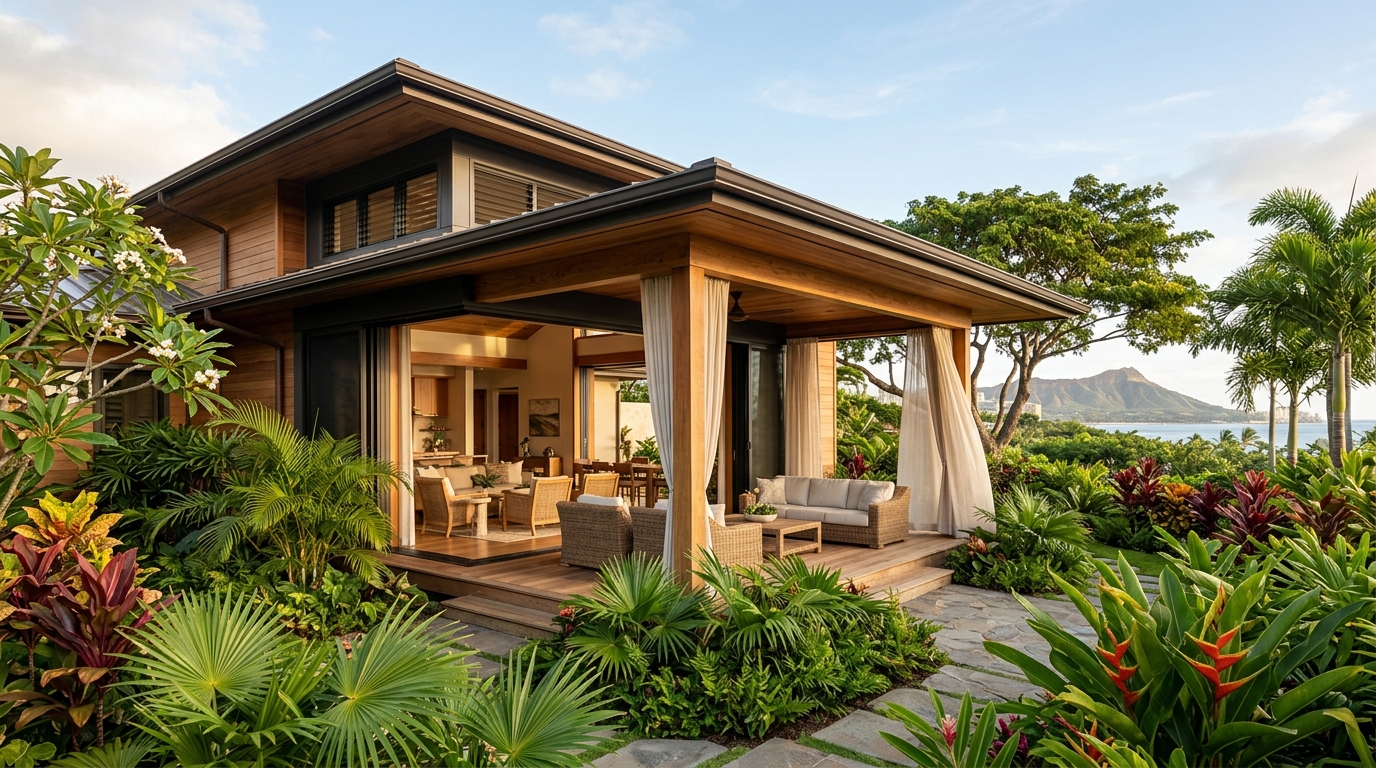
Designing a home in Hawaii sounds simple at first.
You pick a beautiful floor plan. Add big windows. Open up the living room. Maybe create a nice lanai. Then let the tropical views do the rest.
Easy, right?
Not exactly.
A home in Hawaii has to do more than look beautiful in a drawing. It has to work with sun, rain, humidity, trade winds, salt air, sloped lots, outdoor living, local codes, and the way people actually live here.
That is why designing a home in Hawaii is different than designing a home almost anywhere else.
A plan that works perfectly in California, Arizona, Nevada, or Texas may not feel right in Honolulu. It may look great on a screen. It may even look impressive in a rendering. But once it is built, the little things start to matter.
Is the afternoon sun too strong?
Is the house catching the breeze?
Does the lanai feel useful?
Is the rain draining properly?
Will the materials hold up near the ocean?
Does the home fit the lot, the neighborhood, and local building rules?
These are not minor details.
In Hawaii, these details are the design.
Hawaii Homes Have to Work With the Climate
Many mainland homes are designed around seasons. Hot summers. Cold winters. Dry air. Heating systems. Air conditioning. Insulation for big temperature swings.
Hawaii is different.
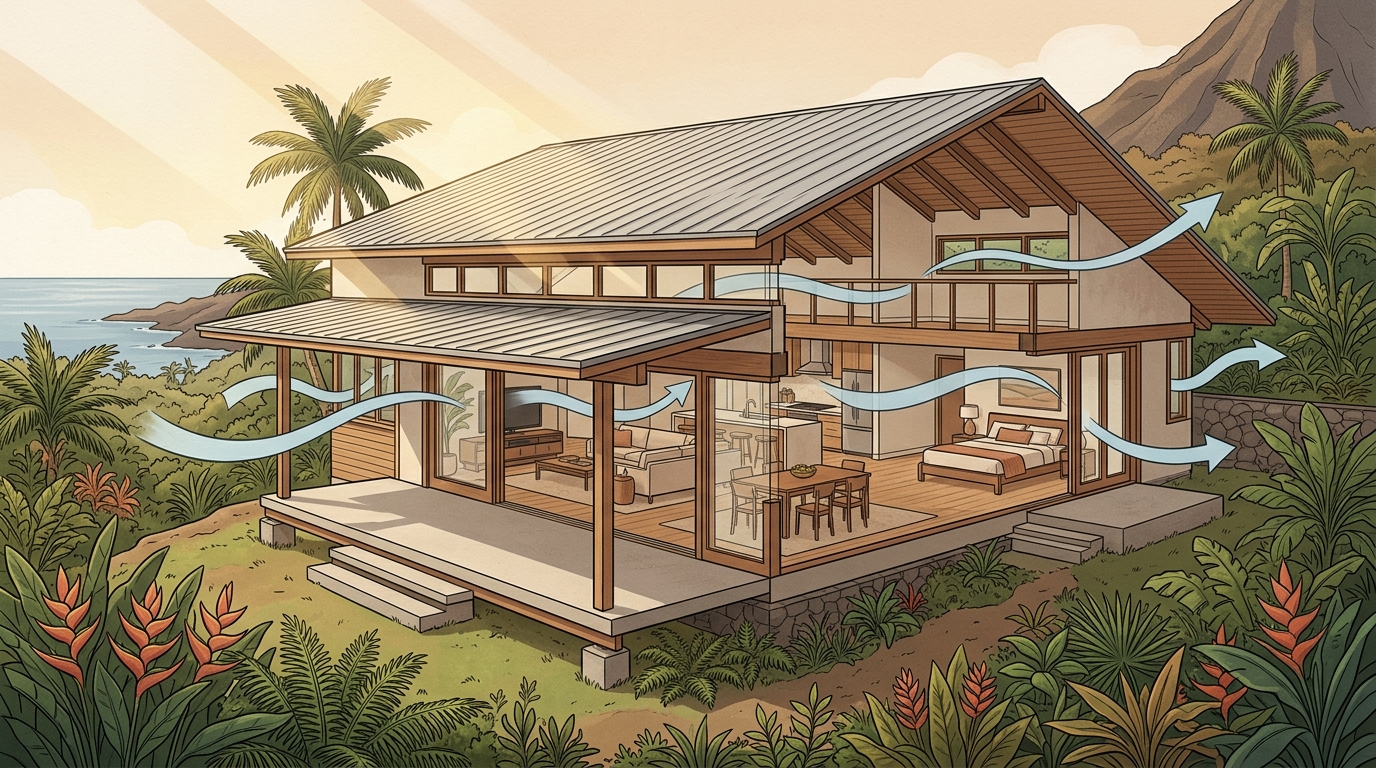
Here, the goal is often to create comfort without making the home feel closed off from the outdoors. That means airflow matters. Shade matters. Window placement matters. Ceiling height matters. Rooflines matter.
A well-designed Hawaii home uses the natural environment instead of fighting it all day long.
This is where passive design becomes important. Passive design simply means the home is planned to stay cooler, brighter, and more comfortable through smart design choices.
For example, the right window placement can help bring in trade winds. A deeper roof overhang can shade hot walls and windows. A thoughtful floor plan can help air move through the house instead of getting trapped.
That kind of design does not happen by accident.
It comes from understanding the local climate before the first drawing is finished.
Sunlight Is Beautiful, But It Has to Be Controlled
Everyone loves natural light.
But in Hawaii, more glass is not always better.
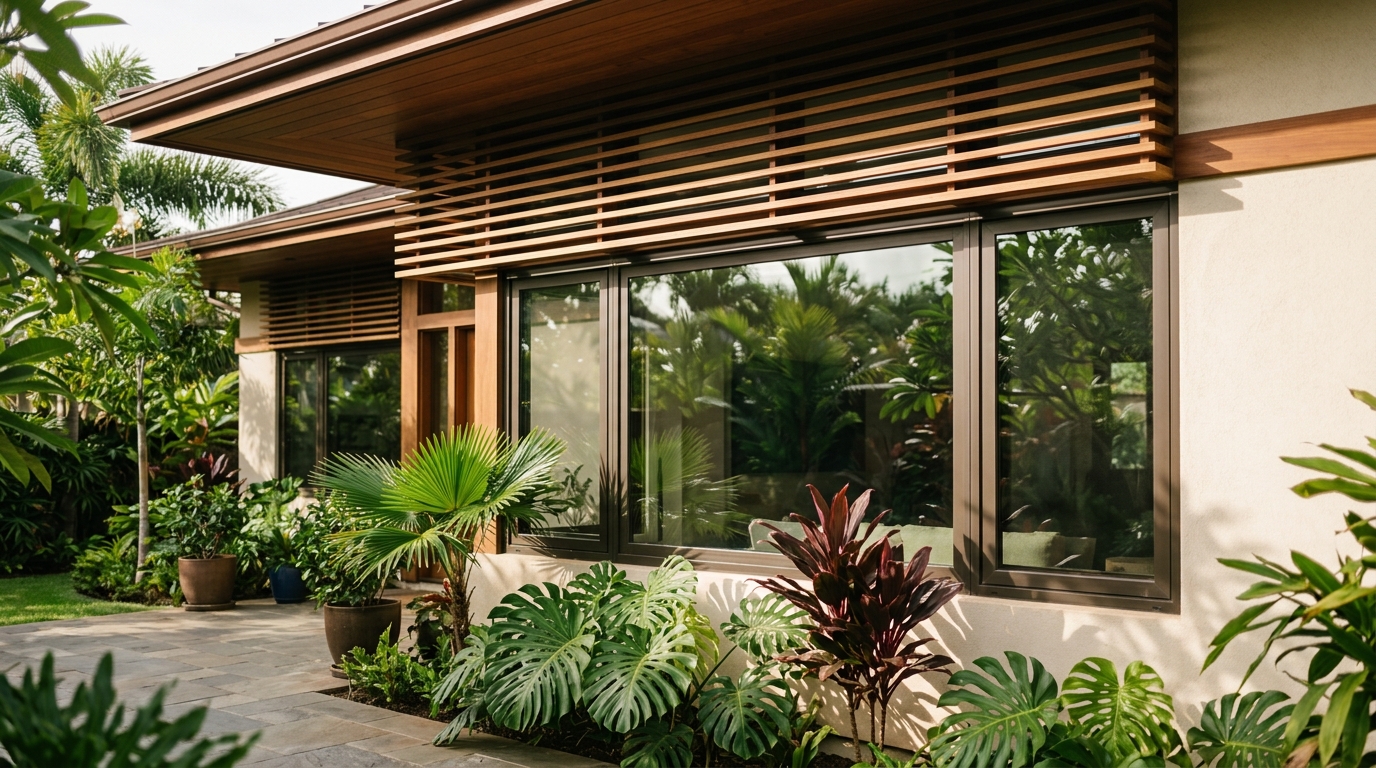
A wall of windows may look amazing in a modern home photo. But if those windows face the wrong direction, the room can become too hot during certain parts of the day. Afternoon sun, especially from the west, can be intense.
That beautiful room may become the room nobody wants to sit in after lunch.
Good Hawaii home design is not about blocking the outdoors. It is about bringing the outdoors in wisely.
The best designs balance light, shade, views, and comfort. They use roof overhangs, covered lanais, window depth, and smart orientation to make a home feel bright without feeling overheated.
This is one of those quiet design choices that homeowners may not notice at first.
But they feel it every single day.
Rain Has to Be Planned For From the Start
Hawaii rain is not something you casually add gutters for at the end.
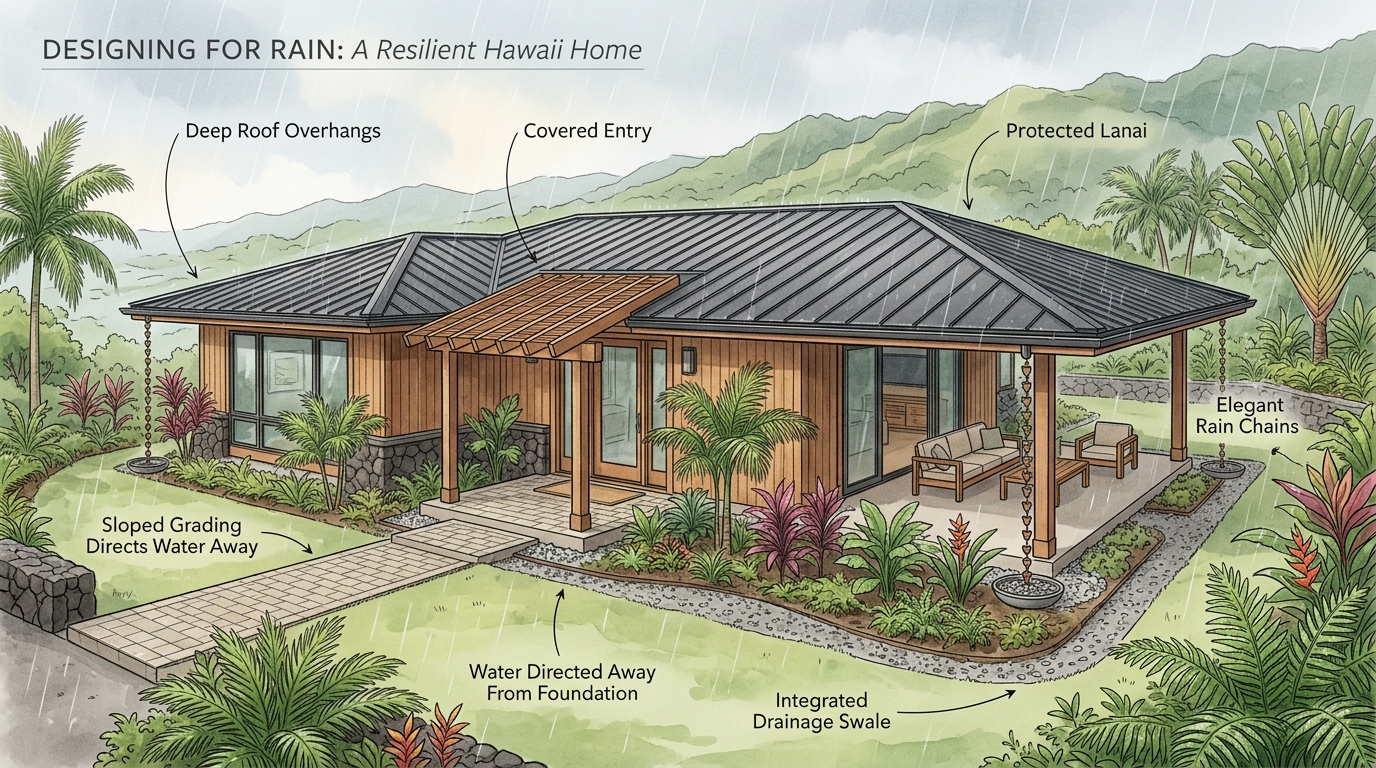
Some areas get quick, heavy rain. Some lots have slope and runoff issues. Some homes need careful grading so water moves away from the structure. Some entries, walkways, and lanais need protection so daily life stays comfortable.
If rain is not considered early, it can affect how the home feels and functions.
Covered entries matter when you are carrying groceries inside. Roof overhangs matter when rain hits the side of the house. Drainage matters when water needs a clear path away from the home.
This is why roof design, grading, and outdoor transitions are such a big part of tropical architecture in Hawaii.
A good home should feel prepared for the weather, not surprised by it.
Salt Air Changes the Material Conversation
If your property is close to the ocean, salt air becomes part of the design.
Salt air can be quiet, but over time it can affect metal, hardware, railings, fixtures, fasteners, and certain finishes. A material that performs well in a dry mainland neighborhood may not age the same way in Hawaii’s coastal environment.
This does not mean every choice has to be expensive.
It means the choices need to be smart.
Local design experience helps homeowners think beyond how something looks on day one. It helps them choose materials that make sense for the location, exposure, maintenance level, and long-term use of the home.
In Hawaii, beauty and durability should work together.
The goal is not just to build something impressive.
The goal is to build something that still feels good years from now.
The Lanai Is Part of the Home, Not a Bonus Space

In many places, outdoor living is treated like an extra.
In Hawaii, it is often central to the home.
A lanai can become the place where people eat, relax, talk, read, enjoy coffee, gather with family, or unwind after work. When it is designed well, it feels like a natural extension of the living space.
When it is designed poorly, it becomes square footage that looks nice but does not get used much.
A good lanai needs shade, airflow, privacy, weather protection, and a strong connection to the inside of the home. It should not feel like it was attached later. It should feel like it belongs.
That is one of the biggest differences in Hawaii home design.
The line between indoors and outdoors should feel easy.
Not forced.
Honolulu Lots Can Be More Complicated Than They Look
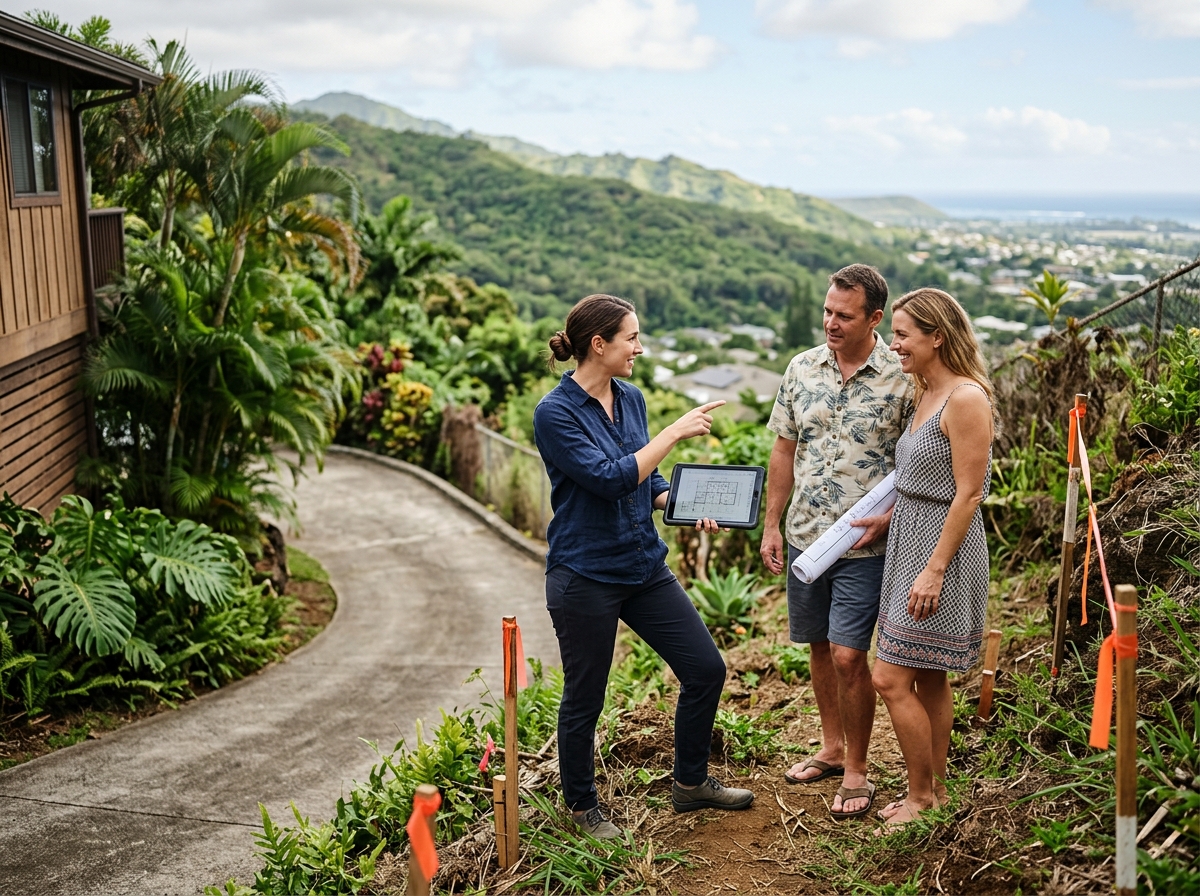
Many homeowners start with a dream floor plan.
Then the lot has other ideas.
In Honolulu, properties can be narrow, sloped, older, oddly shaped, or limited by setbacks, height rules, parking requirements, access issues, or permitting concerns.
That means the best design is not always the one that looks most exciting online.
The best design is the one that works for the actual property.
Before falling in love with a plan, it is important to ask: Can this design really work on this lot?
That one question can save time, money, and frustration.
A local architectural designer can help you think through what is realistic before you get too far down the road.
Great Hawaii Homes Feel Like They Belong Here
The best Hawaii homes do not feel copied and pasted from somewhere else.
They feel connected to the land, the climate, and the lifestyle.
They welcome breezes. They offer shade. They handle rain. They make outdoor living easy. They use materials that make sense. They feel comfortable, practical, and beautiful at the same time.
That is the difference between a house that only looks good and a home that truly lives well.
Designing for Hawaii is not about following a style.
It is about paying attention.
To the sun.
To the wind.
To the rain.
To the land.
To the way your family will actually use the home every day.
That is why local knowledge matters so much.
If you are planning a new home, remodel, addition, or ADU in Honolulu, start with guidance that understands Hawaii from the beginning.
Get your free instant online estimate here:
https://www.architecthonolulu.com/instant-estimate
Or call Home Planning Hawaii for expert help at (808) 978-9028.

Recent Posts


Opening Hours
Mon - Sat 8:00 - 5:30,
Sunday - Closed
.svg)
Location
500 Ala Moana Blvd, Suite 7400
Honolulu, HI 96813


© Copyright 2025 Home Planning Hawaii. All Rights Reserved.
.svg)