

Building or Remodeling in Honolulu? A New Permit Requirement Starts September 1
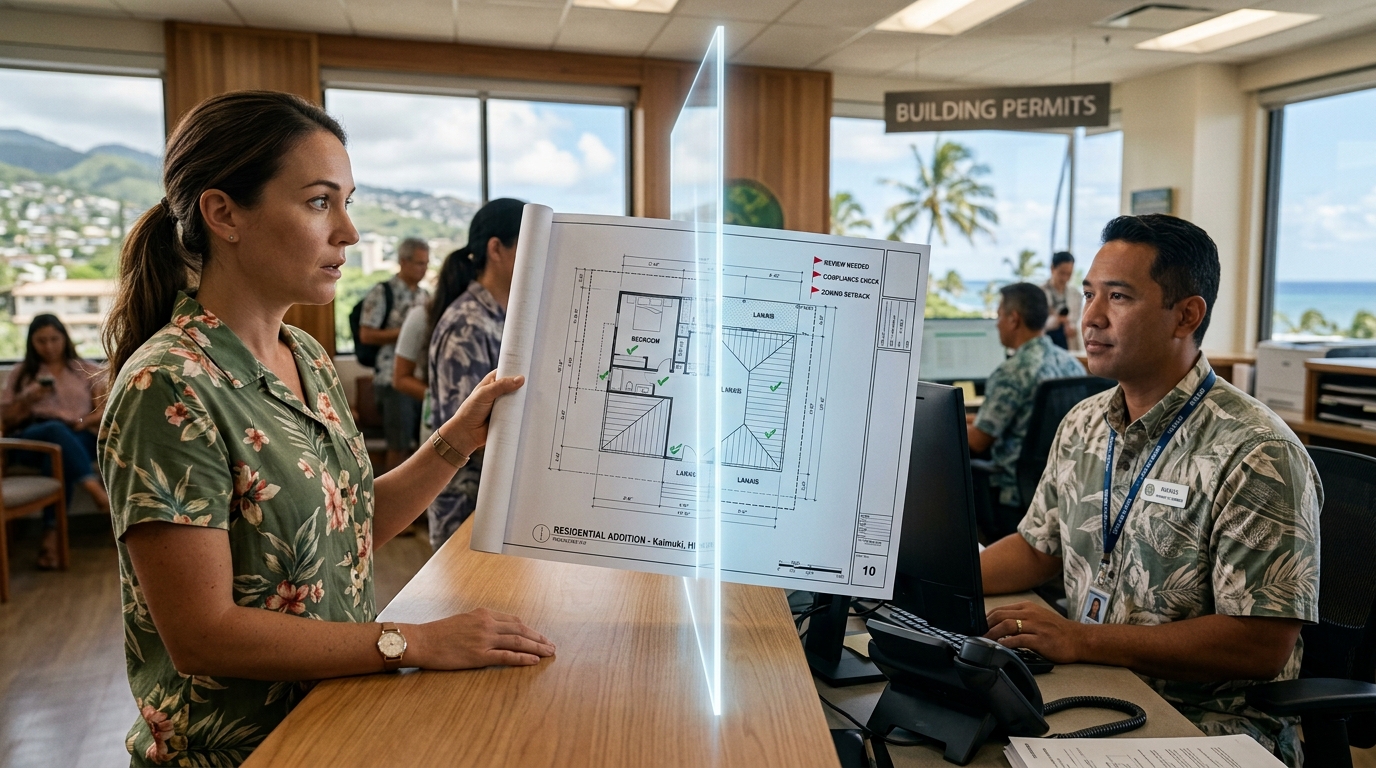
If you’re planning to build a new home, add an ADU, create an ʻohana unit, or remodel your house in Honolulu, there’s a date you need to know:
September 1, 2026.
Starting that day, many residential projects will have to go through a new step before the building permit application can even be submitted.
It’s called CivCheck, and it uses artificial intelligence (AI) to review building plans for possible problems.
And this isn’t an optional shortcut for people who want their permits faster.
For many residential projects, it will be required.
So what exactly is CivCheck? Will your project need it? And does this make getting a building permit easier—or just add another hoop to jump through?
Here’s what Honolulu homeowners should know.
What Changes on September 1?
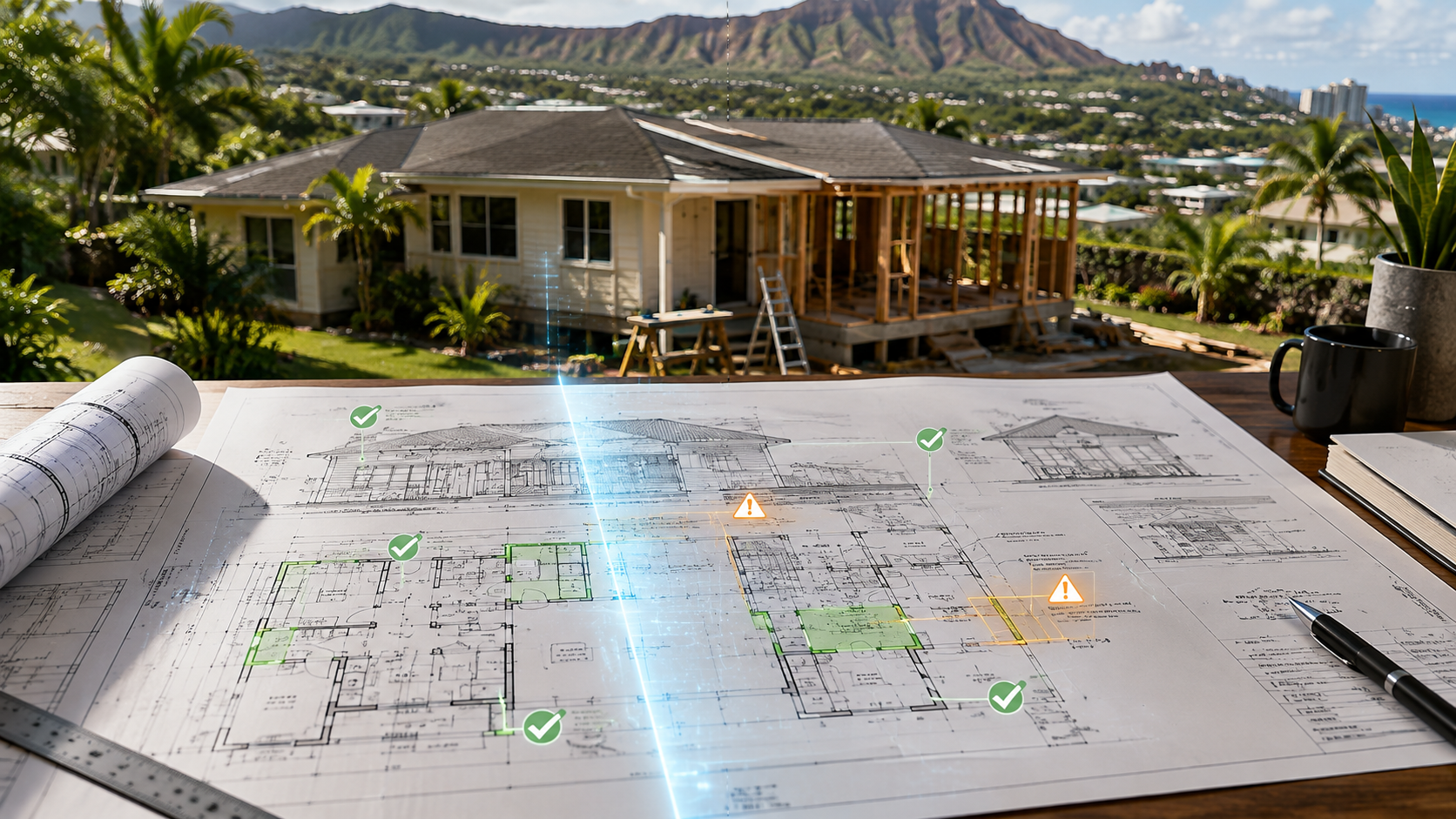
Before you can submit many residential building permit applications through Honolulu’s HNL Build system, the plans will first need to successfully complete the CivCheck pre-application process.
Think of CivCheck as a checkpoint your plans have to pass through on their way to the building department.
Before the permit application can move forward, the project’s plans and required documents must first go through CivCheck. The system looks for potential problems that may need to be corrected before the plans can be formally submitted to the Department of Planning and Permitting (DPP).
Once the CivCheck process is successfully completed, the plans receive a CivCheck watermark and the project receives a CivCheck ID.
Those are then used when the building permit application is submitted through HNL Build.
And here is the part homeowners really need to know:
If your project is required to use CivCheck and you skip it, DPP says your permit application will be rejected during the pre-application review. You’ll have to go back, complete CivCheck, and then submit again.
In other words, after September 1, CivCheck becomes the new front door for many residential permit applications.
Will Your Honolulu Home Project Need CivCheck?
For many homeowners, yes.
According to DPP, CivCheck will be required for:
- New single-family, two-family, and duplex residential construction
- Additions and alterations to existing single-family, two-family, and duplex residential homes, including renovations and remodels
- Accessory Dwelling Units (ADUs)
- ʻOhana units
So if you’re adding bedrooms, expanding your home, building another dwelling on your property, or constructing a new house, this new requirement could apply to you.
But not every permit needs CivCheck.
DPP says it is not currently required for commercial projects, fences, retaining walls, solar projects, general plumbing or electrical work, electrical meter installations, EV chargers, or rewiring projects.
Projects that qualify for Honolulu’s Quick Permit process should not be submitted through CivCheck either.
So the first question isn’t simply, “Do I need a permit?”
It’s “Does my particular permit need CivCheck?”
That distinction could save you from starting down the wrong path.
Why Is Honolulu Adding Another Step?
At first glance, adding another step to Honolulu’s famous building permit process might not sound like something to celebrate.
But the idea behind CivCheck is actually to eliminate problems earlier, when they’re easier to fix.
Imagine submitting your plans and then waiting weeks for someone to discover a problem that could have been caught before submission.
Now the plans have to come back. Changes have to be made. They may need to be resubmitted. The clock keeps ticking.
CivCheck is designed to catch potential issues before the formal DPP review begins, reducing some of that back-and-forth.
And this is where things get interesting.
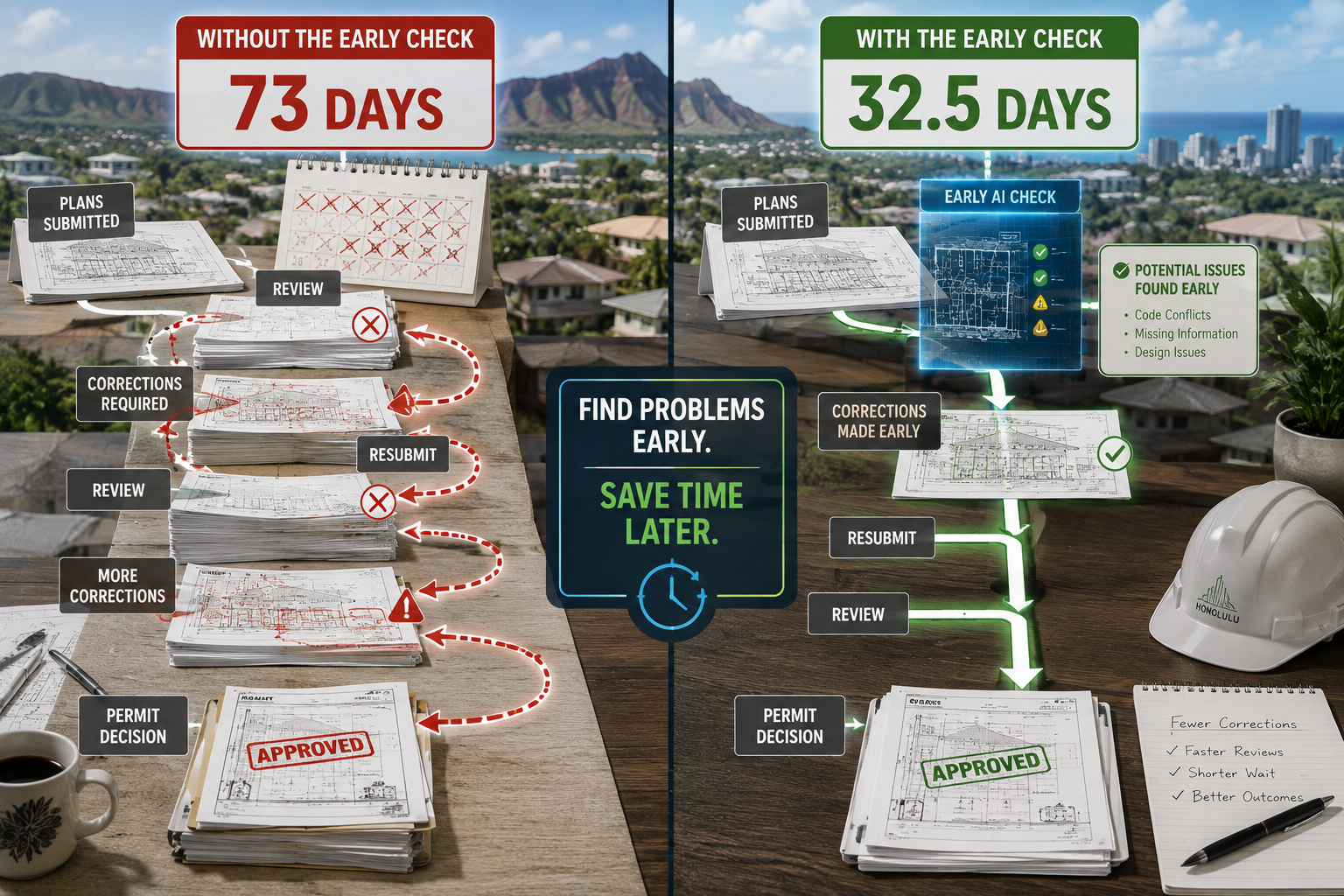
Residential permits using CivCheck reached a permit decision in an average of 32.5 days, compared with 73 days for similar projects that did not use CivCheck.
That’s an average savings of 40.5 days—more than five weeks.
The number of corrections dropped dramatically too. CivCheck projects averaged just 7.7 corrections, compared with 23.5 corrections without CivCheck. And the average number of plan review cycles fell from 3.4 rounds to just 1.4.
In plain English: the plans went into the City’s review process with fewer problems, needed fewer trips back for corrections, and reached a permit decision much faster.
Of course, those numbers don’t mean every homeowner will get a permit in 32.5 days. Every project is different.
But they do help explain something that might otherwise seem strange:
Honolulu is adding an extra step to the beginning of the permit process because that extra step may help eliminate much bigger delays later.
So Does CivCheck Approve Your Building Plans?
No—and this is an important distinction.
Successfully completing CivCheck does not mean you have a building permit.
CivCheck is a pre-check.
It can identify possible issues and help get the application into better shape before submission, but DPP still performs its official review afterward.
The City specifically warns that CivCheck does not replace DPP’s official plan review and does not guarantee that a permit will be approved.
Think of it like having your homework checked before you turn it in.
It can help you catch mistakes before the teacher sees them—but the teacher still grades the assignment.
Can a Homeowner Do CivCheck?
Technically, the CivCheck process starts pretty simply: create an account, create a project, upload the plans and documents, and go through the guided pre-check.
But there’s a catch.
When CivCheck identifies issues, someone may need to understand what those issues mean and how the building plans should be changed to address them.
That can quickly move beyond clicking buttons on a website.
In fact, DPP itself says that because CivCheck can require reviewing and revising technical plans, it recommends having an industry design professional complete the CivCheck submission.
That’s an important point.
AI may be doing part of the checking, but you may still need a human who understands building plans, Honolulu requirements, and how to respond when CivCheck flags something.
We Can Help You Through the New CivCheck Process
If all of this sounds like one more thing you now have to learn just to build or remodel your home, you don’t have to figure it out alone.
Home Planning Hawaii is familiar with CivCheck and can provide the CivCheck review required for eligible residential projects.
We can help prepare your project for the new process, work through issues identified during the CivCheck review, and help get your plans ready for permit submission.
And with CivCheck becoming mandatory for eligible residential projects on September 1, it makes sense to understand the process before you’re ready to submit—not after your application gets kicked back.
Planning a new home, addition, remodel, ADU, or ʻohana unit in Honolulu?
Talk to Home Planning Hawaii before you submit.
Call (808) 978-9028 or fill out our contact form to tell us about your project and find out how we can help with your plans, permitting, and CivCheck review.

Recent Posts


Opening Hours
Mon - Sat 8:00 - 5:30,
Sunday - Closed
.svg)
Location
500 Ala Moana Blvd, Suite 7400
Honolulu, HI 96813


© Copyright 2025 Home Planning Hawaii. All Rights Reserved.
.svg)